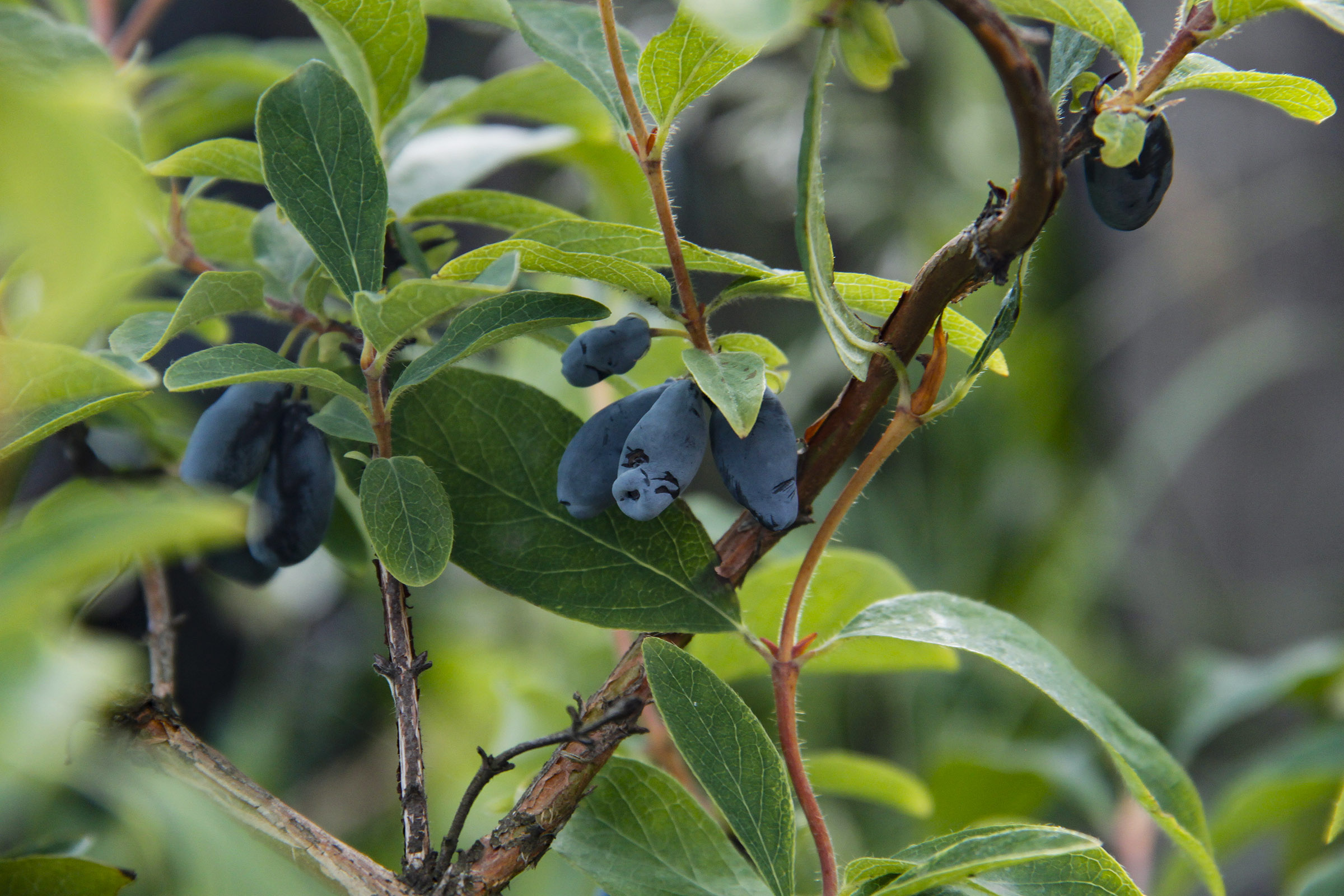
Haskap Growth in the First Three Years
Haskap plants establish slowly compared to some small fruit crops. In the first season after planting, most of the plant's energy goes into root development rather than above-ground growth. Canes may grow only 20–40 cm in year one. By year two, growth accelerates noticeably, and flowering often begins. By year three, most well-established plants can support a meaningful first harvest.
During this period, the goal of pruning is not to maximize fruit yield — which would mean removing less wood — but to establish a canopy architecture that will be productive and manageable for the following decade or more.
Over-harvesting in year three — leaving excessive cane density to maximize early yield — tends to create crowded canopy structure that is difficult to correct later and can reduce airflow, increasing disease pressure.
When to Prune: Timing Relative to the Growing Cycle
Haskap is best pruned during dormancy, after the plant has fully entered its winter rest and before bud swell in spring. In most Canadian prairie and Atlantic regions, this falls in late February through early April depending on the local spring calendar.
Pruning too early in the fall — before dormancy is complete — can stimulate late-season growth that is vulnerable to early frosts. Pruning too late in spring, after buds have opened, risks removing current-season fruit-bearing wood and stresses the plant as it enters rapid growth.
Post-harvest pruning (performed shortly after the berries are picked in early summer) is sometimes recommended for mature plantings as a way to remove old wood and allow new cane development during the remainder of the growing season. For plants in their first harvest year, post-harvest pruning is generally limited to removing clearly damaged or dead wood.
What to Remove at First Harvest Pruning
The following categories of wood are typically addressed in a first-harvest pruning pass:
Dead, Damaged, or Diseased Wood
Any canes showing dieback, winter kill, or signs of disease are removed to the base or back to healthy wood. In cold Canadian winters, tip dieback is common — the live wood is identifiable by its green cambium layer just beneath the bark.
Crossing or Rubbing Branches
Branches that cross through the center of the plant or rub against adjacent canes create wounds that become entry points for disease organisms. Removing one of the two conflicting branches, preferably the weaker or less structurally sound one, reduces this risk.
Weak or Thin Basal Shoots
New canes that emerge from the base but are too thin (typically under 8–10 mm in diameter at the base) are unlikely to develop into productive structural wood. Removing some of these during first-harvest pruning reduces competition for resources and focuses energy into the stronger canes.
Inward-Growing Branches
Branches directed toward the center of the canopy reduce light penetration. Haskap, like most small fruit crops, produces more fruit on wood that receives adequate light. An open, bowl-shaped canopy structure generally outperforms a dense, closed canopy in terms of both fruit quality and harvesting ease.
What Not to Remove
First-harvest pruning should be conservative. The structural canes that form the main framework of the plant — typically two to four strong basal canes per plant at this age — should not be removed. Aggressive renovation pruning (cutting most of the plant back to the crown) is appropriate only for older, established plants that have become unproductive, not for young plants in their first harvest year.
The previous season's growth — canes that developed in the spring and summer before the first harvest — carries much of the fruiting potential for the upcoming season. These are identifiable by their relatively smooth bark and lighter color compared to older wood. Removing most of this wood at first-harvest pruning would substantially reduce the upcoming harvest.
Tool Selection and Sanitation
For haskap pruning, the tools typically used are:
- Hand pruners (bypass type) — for canes up to roughly 15 mm in diameter. Bypass pruners make cleaner cuts than anvil types and cause less wood crush.
- Loppers — for older, thicker canes up to 40–50 mm in diameter.
- Pruning saw — for the largest basal stems or for renovation work.
Tool sanitation between plants, or at minimum between rows, reduces the risk of spreading fungal or bacterial pathogens. A diluted bleach solution (approximately 1 part bleach to 9 parts water) or commercial disinfectant used to wipe blades between cuts is standard practice in commercial orchards where disease is a concern.
Cane Count Targets in Young Haskap Plants
Published guidance from haskap growers in Saskatchewan has suggested target cane counts for young plants, though specific numbers vary by cultivar and desired plant size:
- Year 3 (first harvest): 4–8 main structural canes per plant, removing the weakest and most crowded
- Year 4–5: 6–12 canes per plant, depending on cultivar vigor and row spacing
- Mature plant: 15–20 or more canes per plant in high-yield management systems
These numbers are not prescriptive — they represent ranges observed in documented plantings and should be adjusted based on observed plant vigor and spacing.
Mechanical vs. Hand Pruning in Commercial Rows
Hand pruning is the standard for young plants where structural decisions are being made on a plant-by-plant basis. In mature commercial haskap orchards, mechanical pruning using hedgers or cane pruners reduces labor cost, though at the expense of selectivity. For first-harvest pruning, hand pruning is generally preferred because the canopy architecture established in this period affects productivity for subsequent years.