Pollinator Pairing for Haskap Varieties in Canadian Orchards
How to match compatible haskap cultivars for reliable cross-pollination, including bloom-time overlap and spacing considerations for Canadian growing conditions.
Read articleCold Climate Horticulture · Canada
Practical reference on growing haskap berries in cold Canadian climates — covering pollinator pairing, soil pH management, and pruning protocols through first harvest.
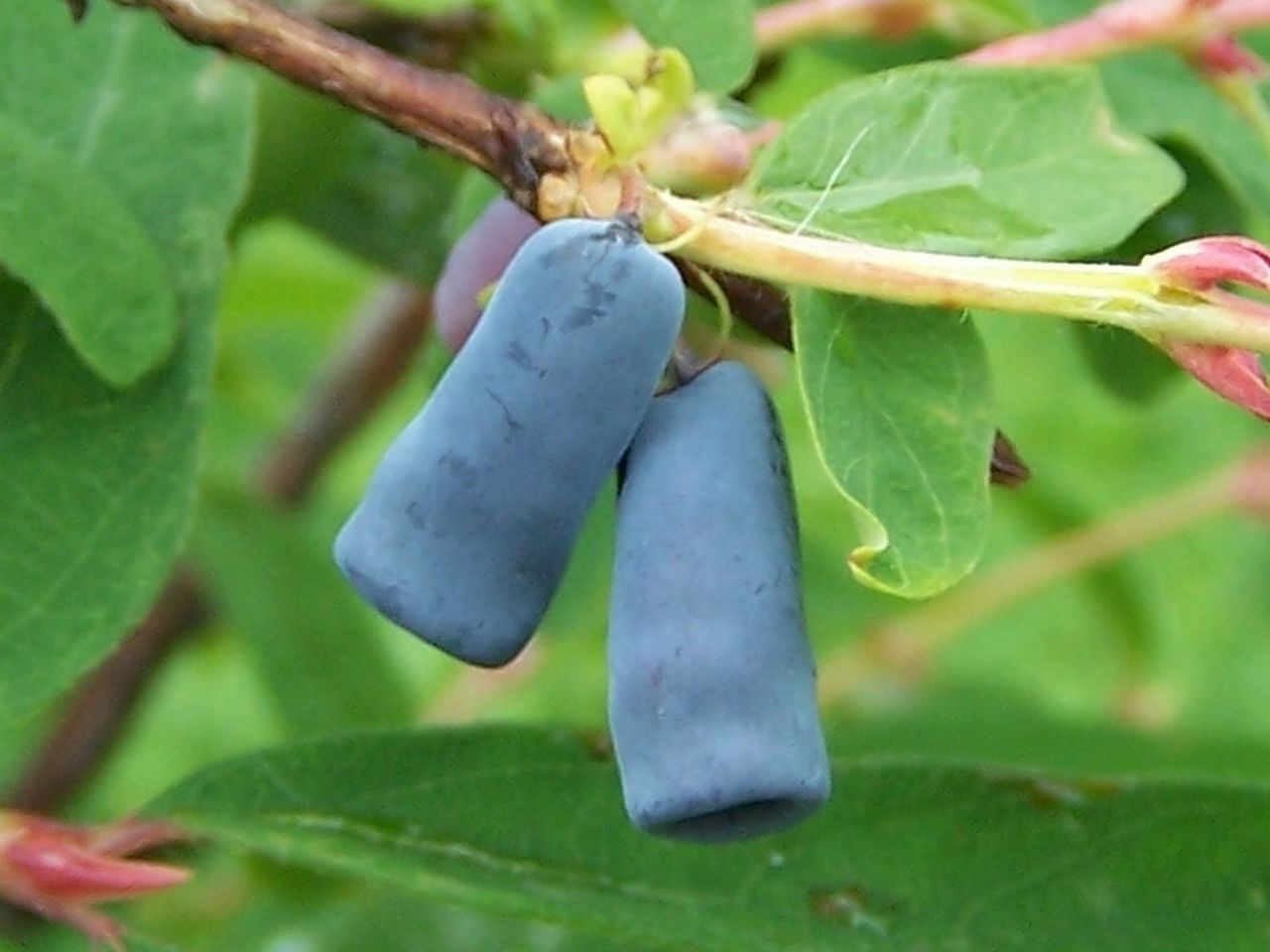
Haskap berries on plant. Photo: Hansicanada, CC BY-SA 4.0, Wikimedia Commons.
Haskap roots tolerate slightly acidic soils. pH below 5.0 or above 7.0 leads to nutrient uptake issues and reduced fruit set.
Haskap is largely self-sterile. At least two genetically distinct varieties with overlapping bloom times are needed for fruit production.
Yields build gradually. Light pruning in the third and fourth seasons shapes the canopy without reducing fruit-bearing wood.
Articles
Three focused articles covering the core topics for establishing and managing haskap rows in cold-climate Canadian orchards.
How to match compatible haskap cultivars for reliable cross-pollination, including bloom-time overlap and spacing considerations for Canadian growing conditions.
Read article
An examination of pH tolerances specific to Lonicera caerulea, amendment strategies for Canadian prairie and boreal soils, and monitoring methods.
Read article
Pruning approaches that balance early canopy development with fruit production, covering timing, tool selection, and common mistakes in young haskap plantings.
Read articleBackground
Haskap (Lonicera caerulea) is a cold-hardy berry shrub native to boreal regions of Russia, Japan, and northern China. In Canada, commercial interest has grown primarily in Saskatchewan, Manitoba, Alberta, and parts of British Columbia and Atlantic Canada, where the species' natural cold tolerance aligns well with local growing conditions.
The University of Saskatchewan haskap breeding program, led by researchers including Dr. Bob Bors, has produced a series of named cultivars adapted to Canadian prairie winters. These varieties differ considerably in bloom timing, fruit characteristics, and pollinator compatibility — factors that directly affect orchard design.
Because haskap flowers emerge very early in spring — often before most other fruiting shrubs — the species can produce a crop even in seasons with late frosts, as its flowers tolerate brief dips below freezing at certain developmental stages.
This site documents three areas essential to orchard establishment: pollinator variety selection, soil pH preparation, and early pruning practices.
Contact
Questions about the content on this site, corrections, or general inquiries can be submitted using the form.
Content on this site is for informational and reference purposes only. Always consult local agricultural extension services or certified horticulturists for site-specific advice.
The information presented on Vinmelion.org is intended as a general educational reference. Conditions vary by location, soil type, and microclimate. Always verify recommendations with local agricultural services.