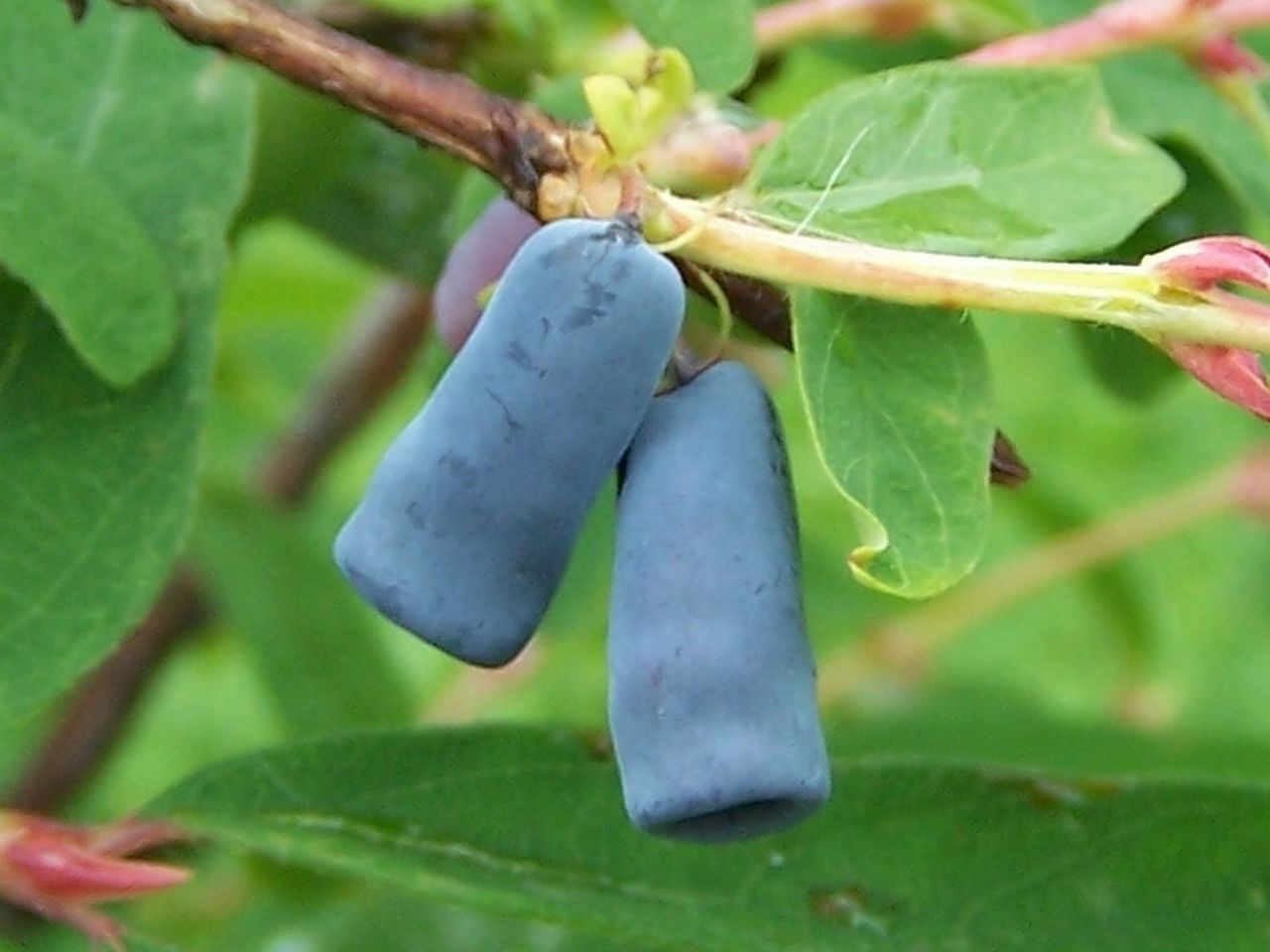
Haskap's pH Tolerance Range
Haskap (Lonicera caerulea) grows across a broader pH range than some other small fruit crops. Published observations from University of Saskatchewan trials and grower records place the functional range at approximately pH 5.0 to 7.5, with the range that supports consistent nutrient availability and vigorous growth cited most commonly as 5.5 to 6.5.
At pH values below 5.0, aluminum and manganese can become mobile in soil water to concentrations that are phytotoxic, and phosphorus availability declines significantly. At pH values above 7.5, iron, manganese, zinc, and boron become less available, leading to deficiency symptoms that can resemble other disorders.
Haskap is generally more tolerant of alkaline conditions than blueberry, which has a strict optimum around pH 4.5 to 5.0. However, pH above 7.0 does create measurable yield and growth reductions in documented haskap plantings.
Soil Conditions Across Canadian Growing Regions
Canadian soils relevant to haskap production span a considerable range. Prairie Chernozem soils — dark, organic-matter-rich soils that underlie much of Saskatchewan and Manitoba's agricultural land — are often naturally near neutral (pH 6.5 to 7.0) or slightly alkaline when carbonate is present in the profile. Atlantic Canada soils, by contrast, tend to be more acidic, frequently sitting in the 5.0 to 6.0 range without amendment.
| Region | Typical Unamended pH | Amendment Direction for Haskap |
|---|---|---|
| Saskatchewan / Manitoba prairies | 6.5–7.5 | Often no amendment needed; acidify if above 7.5 |
| Alberta (varying by area) | 6.0–7.5 | Depends on local soil type; test before planting |
| British Columbia interior | 5.5–7.0 | Often suitable; some sites may need lime |
| Atlantic Canada | 4.5–6.0 | May need lime to raise pH toward 5.5–6.0 |
Soil Testing Before Planting
A soil test conducted at least one full growing season before planting provides time to apply amendments and allow them to integrate into the soil profile. Testing from multiple points across the field — particularly if the terrain is variable — gives a more accurate picture than a single sample.
Provincial soil testing laboratories in Canada include facilities at the University of Saskatchewan (provincial Saskatchewan lab) and accredited private labs that serve multiple provinces. Most labs report pH alongside exchangeable cations, organic matter percentage, and sometimes micronutrient levels for a standardized per-sample fee.
Testing ideally covers:
- pH (water and buffer pH)
- Organic matter percentage
- Cation exchange capacity
- Phosphorus, potassium, calcium, magnesium levels
- Micronutrients (iron, manganese, zinc, boron) if field history suggests potential deficiency
Reducing Soil pH (Acidification)
Where soil pH is above the haskap optimum — most commonly in prairie regions with calcium carbonate in the profile — acidification is possible but slow. Elemental sulfur is the standard material used. Soil bacteria oxidize the sulfur to sulfuric acid over the course of weeks to months, depending on soil temperature and moisture.
Because the process depends on microbial activity, applications made in fall before a cold winter may not show measurable pH change until the following summer. Incorporation into the soil, rather than surface application, speeds the process. The amount of sulfur required to achieve a given pH shift depends on the soil's buffering capacity — carbonate-rich soils require more material than low-carbonate soils for the same pH change.
Raising Soil pH (Liming)
Where soil pH is below 5.5 — which occurs most commonly in Atlantic Canada or forested sites — agricultural lime (calcium carbonate) is the standard amendment. Dolomitic lime, which also supplies magnesium, is used where magnesium levels are low.
Lime reacts most effectively when worked into the root zone rather than applied at the surface. Lime applied the fall before planting, then tilled in, allows the reaction to proceed before the first growing season.
Ongoing pH Management
Soil pH is not static. Nitrogen fertilization with ammoniacal or urea-based fertilizers has an acidifying effect over time. Leaching in higher-rainfall regions also tends to reduce pH gradually. Monitoring pH every two to three years in established haskap orchards allows growers to detect drift before it becomes agronomically significant.
Surface-applied sulfur or lime can be used in established plantings, though incorporation is not possible without damaging roots. Surface applications work more slowly than incorporated amendments.
Organic Matter and pH Interaction
High organic matter content tends to buffer soil pH against rapid changes. Prairie Chernozem soils with organic matter above 4–5% are more resistant to both acidification and alkalinization than sandy or low-organic soils. For haskap planted in converted prairie land, this buffering capacity is an asset — pH is less likely to shift dramatically in either direction between planting and canopy establishment.
Where organic matter is low — as may occur on old agricultural fields that have been cropped intensively — incorporating compost or other organic material at site preparation can improve both buffering capacity and overall soil structure.